

The Impact of Mobile Devices on Gambling Game Design and Betting Mechanics
The widespread adoption of smartphones and tablets has fundamentally reshaped how gambling products are designed and consumed. Mobile devices are no longer an additional channel but the primary environment in which users interact with betting systems and casino games. This shift has influenced everything from interface layout to the underlying mechanics that govern wagering behaviour, risk perception, and session length.
Mobile-first thinking in modern gambling design
By 2025, most gambling operators prioritise mobile-first development, treating desktop versions as secondary adaptations. This approach reflects real user behaviour, as mobile traffic consistently exceeds desktop usage across regulated markets. Designers now build interfaces around touch interaction, vertical orientation, and one-handed navigation, which directly affects how games are structured and how betting options are presented.
Screen size limitations have forced a reduction in visual clutter and the simplification of betting controls. Complex menus, previously acceptable on large screens, have been replaced by layered interfaces and context-sensitive buttons. This has led to clearer betting flows, but also to fewer visible decision points, which subtly influences how quickly bets are placed.
Mobile-first design has also encouraged shorter play cycles. Games are increasingly structured around brief sessions that fit into everyday routines, such as commuting or short breaks. As a result, betting mechanics often favour rapid outcomes and immediate feedback, aligning with the expectations of mobile users.
Touch interaction and interface ergonomics
Touchscreens have changed the physical relationship between the player and the game. Buttons must be large enough to avoid accidental inputs, while swipe and tap gestures are now integral to navigation. This has reduced reliance on traditional confirmation steps, streamlining the betting process but also increasing the importance of clear visual cues.
Ergonomic considerations influence where key betting elements are placed on the screen. Most critical actions are positioned within the natural thumb zone, especially on larger smartphones. This design choice improves usability but also makes repeated betting actions easier and faster to perform.
Haptic feedback, such as subtle vibrations, has become a common feature in mobile gambling products. These physical responses reinforce user actions and outcomes, creating a more tactile experience that was previously unavailable on desktop devices.
Changes in betting mechanics driven by mobile usage
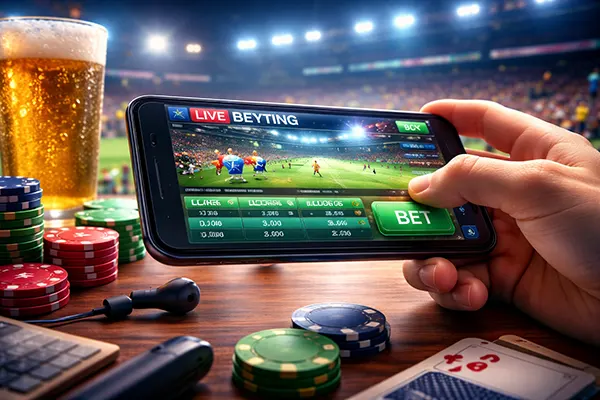
Mobile environments have encouraged the development of simplified betting mechanics that reduce cognitive load. Odds displays, stake selection, and bet confirmation are often condensed into a single screen. This minimises friction and supports quicker decision-making, which aligns with mobile usage patterns.
Live betting has particularly benefited from mobile optimisation. Real-time odds updates, combined with push notifications, allow users to place bets instantly during sporting events. This immediacy has led to more dynamic betting mechanics, where odds shift rapidly and betting windows are intentionally brief.
Micro-betting has expanded significantly due to mobile access. Bets on short-term outcomes, such as the next point or play, are well suited to mobile interaction. These mechanics rely on speed and accessibility, both of which are strengths of mobile devices.
Personalisation and adaptive betting flows
Mobile devices generate detailed behavioural data, including session duration, interaction speed, and preferred bet types. This data is increasingly used to personalise betting interfaces in real time. Users may see customised stake suggestions or reordered betting options based on previous activity.
Adaptive betting flows adjust complexity according to user behaviour. New or infrequent users are often shown simplified options, while experienced players gain access to more advanced markets. This layered approach helps retain users while reducing initial barriers to entry.
Personalisation also extends to timing. Notifications and in-app prompts are scheduled based on typical usage patterns, reinforcing habitual engagement. While this improves relevance, it also raises important considerations around responsible design and user protection.
Technical constraints and opportunities of mobile hardware
Mobile hardware imposes specific technical constraints that influence game design. Battery consumption, processing power, and network stability must all be considered. Games are therefore optimised to run efficiently without excessive resource use, which affects animation complexity and feature density.
At the same time, modern smartphones offer advanced capabilities such as biometric authentication and high-refresh-rate displays. These features enhance security and visual smoothness, improving overall user confidence and comfort when placing bets or making deposits.
Connectivity remains a critical factor. Designers must account for variable network conditions, ensuring that betting actions are resilient to brief disconnections. This has led to improved transaction handling and clearer status indicators during live betting.
Security, regulation, and user trust on mobile
Mobile gambling design increasingly integrates security measures directly into the user experience. Biometric login methods, such as fingerprint or facial recognition, reduce friction while maintaining strong account protection. These tools are now widely accepted and expected by users.
Regulatory requirements have also shaped mobile interfaces. Clear access to account limits, session timers, and self-exclusion tools is mandatory in many jurisdictions. Designers must incorporate these elements without disrupting the overall usability of the product.
User trust is reinforced through transparency. Mobile interfaces now commonly display real-time balance updates, confirmation messages, and accessible transaction histories. These features help users maintain awareness of their activity, supporting more informed decision-making.
-
 Apple Pay and Google Pay in Online Casinos: Where They ...
Mobile payment services have become a common way to fund …
03/06/2026See more -
 Betfair Casino — Game Comparison, RTP Logic and Bonus L...
Betfair Casino operates under the Flutter Entertainment group and remains …
02/17/2026See more -
 Betinia Casino registration, KYC and financial limits i...
Registration and verification are not “extra steps” at Betinia — …
01/28/2026See more